

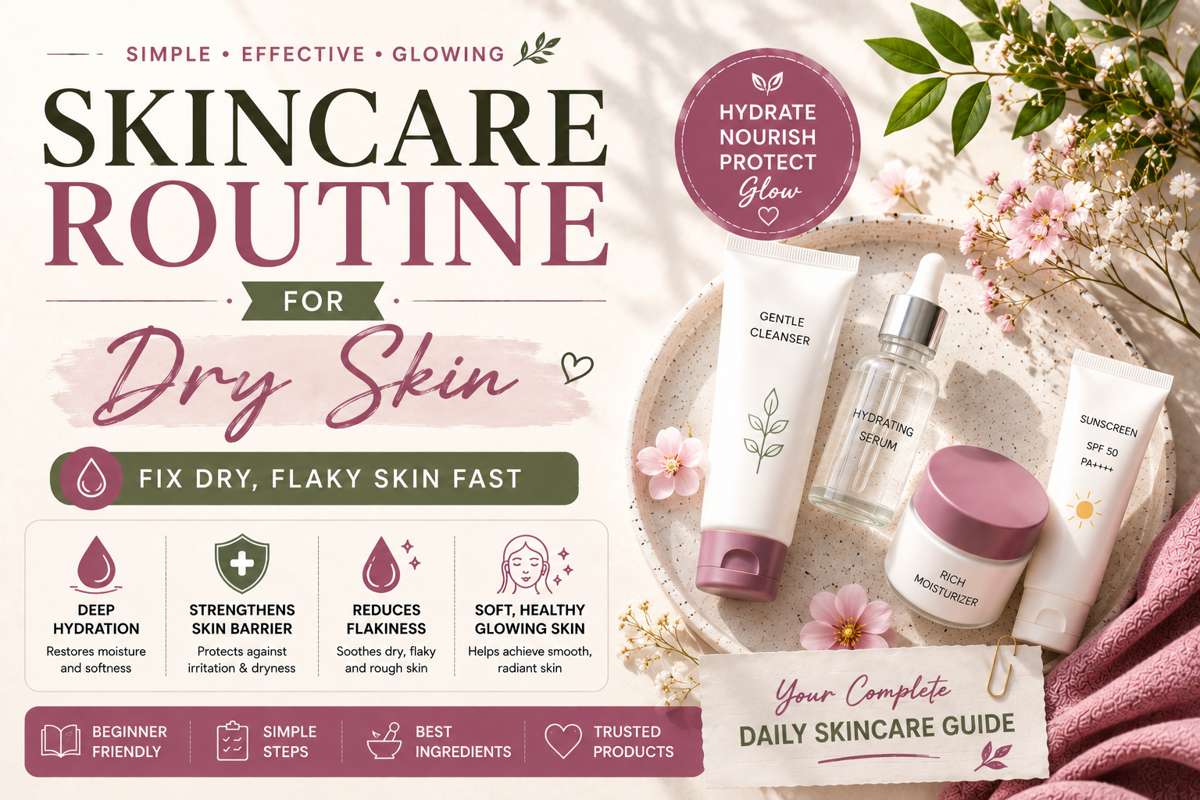
Best Products for Dry Skin – Quick Picks
| Product Type | Best Pick | Best For | Price |
|---|---|---|---|
| Gentle Cleanser | CeraVe Gentle Skin Cleanser | Sensitive & dry skin | Check Price |
| Moisturizer | Bioderma Moisturising Cream | Deep hydration | Check Price |
| Hydrating Serum | The Ordinary Hyaluronic Acid Serum | Dry & dull skin | Check Price |
| Sunscreen | Dot & Key Vitamin C + E Super Bright Sunscreen | Daily protection | Check Price |
✨ Simple Skincare Routine for Dry Skin
If you have dry, flaky, or tight skin, follow this simple routine daily:
- Use a gentle hydrating cleanser
- Apply a hydrating toner or serum
- Use a moisturiser with ceramides or hyaluronic acid
- Apply sunscreen every morning
- Avoid harsh exfoliation
This daily skincare routine for dry skin helps repair the skin barrier, lock in moisture, and give soft glowing skin.
Dry, tight, and flaky skin can make your face feel uncomfortable all day. If your skin still feels dry even after applying moisturizer, your routine might be missing key steps.
The good news? You don’t need a complicated routine.
In this guide, you’ll learn a simple skincare routine for dry skin that actually works — even if your skin is extremely dry.
Understanding Dry Skin:
>> What is Dry Skin?
Dry skin lacks the necessary moisture and natural oils to maintain a soft, supple texture. It often appears rough, flaky, and can feel tight, especially after cleansing. Dry skin may also become more sensitive, leading to redness, irritation, and an increased risk of premature aging if not properly cared for.
Common Causes of Dry Skin:
- Harsh weather conditions like cold winter air or dry summer heat can strip the skin of its natural oils.
- Overwashing the face with hot water can lead to dehydration by removing essential moisture.
- Using products containing alcohol, sulfates, or strong fragrances can further irritate and dry out the skin.
- Aging, which leads to decreased oil production, making the skin more prone to dryness and wrinkles.
- Certain skin conditions like eczema or psoriasis can exacerbate dryness and irritation.
Understanding these causes is the first step in how to prevent dry skin and maintain a good skincare routine for dry skin.
Difference in Dry Skin and Sensitive Dry Skin:
While dry skin and sensitive dry skin share some common symptoms, they are not the same. Dry skin lacks moisture and natural oils, leading to flakiness and tightness, whereas sensitive dry skin is more reactive to environmental triggers and certain skincare ingredients. If you have sensitive dry skin, you may experience redness, itching, or burning sensations when using certain products.
Key Differences:
- Dry skin primarily lacks hydration and feels rough or scaly.
- Sensitive dry skin is prone to irritation, redness, and inflammation.
- Sensitive dry skin requires extra caution when choosing skincare products, avoiding harsh exfoliants and fragrances.
If you have sensitive dry skin, opt for gentle, fragrance-free products with soothing ingredients like aloe vera, chamomile, and colloidal oatmeal.
How to Find Out You Have Dry Skin or Sensitive Dry Skin:
Determining whether you have dry skin or sensitive dry skin can help you choose the right skincare routine. Here are some key indicators:
Signs of Dry Skin:
- Your skin feels tight, especially after cleansing.
- Flakiness, rough patches, and peeling are common.
- A dull complexion with a lack of natural glow.
- Fine lines appear more pronounced due to dehydration.
- Your skin may feel itchy but is not overly reactive to skincare products.
Signs of Sensitive Dry Skin:
All the symptoms of dry skin, plus:
- Redness or blotchiness, especially after using skincare products.
- A stinging or burning sensation when applying certain products.
- Increased sensitivity to environmental factors like cold, wind, or sun exposure.
- Prone to irritation from fragrances, alcohol, and strong exfoliants.
Self-Test to Identify Your Skin Type:
- Wash your face with a mild cleanser and pat it dry.
- Wait 30 minutes without applying any products.
- Observe how your skin feels:
- If it feels tight and rough but not irritated, you likely have dry skin.
- If it feels tight, itchy, and becomes red or inflamed, you likely have sensitive dry skin.
Tip: If you suspect sensitive dry skin, opt for fragrance-free, hypoallergenic skincare products with soothing ingredients like aloe vera, chamomile, and colloidal oatmeal.
If you notice these symptoms, following a good skincare routine for dry skin can help restore hydration and improve your skin’s health.
🌞 Morning Skincare Routine for Dry Skin
A proper morning skincare routine helps keep dry skin soft, hydrated, and protected throughout the day. The key is to use gentle and hydrating products that support your skin barrier instead of stripping away moisture.
Step 1: Use a Gentle Hydrating Cleanser
Harsh face washes can make dry skin feel even tighter and flakier. Start your morning with a gentle cleanser that removes dirt without stripping your skin’s natural oils.
Look for ingredients like:
- Glycerin
- Ceramides
- Hyaluronic acid
A gentle cleanser like CeraVe hydrating cleanser works well for dry and sensitive skin types.
Step 2: Apply a Hydrating Toner or Essence
A hydrating toner adds an extra layer of moisture and helps prepare your skin for the next skincare steps.
This step is especially helpful if your skin feels tight immediately after washing your face.
Look for:
- Hyaluronic acid
- Rice water
- Glycerin
- Panthenol
Avoid alcohol-based toners because they can dry out your skin further.
Step 3: Use a Hydrating Serum
A serum helps deeply hydrate the skin and improve dryness from within.
One of the best ingredients for dry skin is hyaluronic acid because it attracts and retains moisture.
This step helps:
- reduce flaky skin
- improve skin texture
- make skin look plumper and glowing
A lightweight hydrating serum can make a huge difference in a daily skincare routine for dry skin at home.
Step 4: Apply a Moisturizer
Moisturiser is the most important step for dry skin because it locks in hydration and protects the skin barrier.
Choose moisturizers with:
- Ceramides
- Shea butter
- Squalane
- Glycerin
If your skin feels extremely dry, use a thicker cream-based moisturizer instead of a lightweight gel.
A rich moisturiser like CeraVe Moisturiser works well for deep hydration.
Step 5: Never Skip Sunscreen
Many people with dry skin skip sunscreen because some formulas feel drying. However, sunscreen is essential to protect your skin barrier and prevent further dryness and irritation.
Choose a hydrating sunscreen with SPF 30 or higher.
A lightweight option like Minimalist SPF 50 works well for daily use.
✨ Pro Tip for Dry Skin
If your skin still feels dry during the day, try applying moisturizer on slightly damp skin. This helps lock in hydration more effectively and keeps your skin soft for longer.
🌙 Night Skincare Routine for Dry Skin
Your skin repairs itself overnight, which makes your nighttime skincare routine extremely important. A good night skincare routine for dry skin focuses on deep hydration, nourishment, and repairing the skin barrier while you sleep.
Step 1: Cleanse Your Skin Gently
At night, your skin collects dirt, sweat, sunscreen, and makeup throughout the day. Cleansing helps remove all impurities without damaging your skin barrier.
Use a gentle, non-foaming cleanser that keeps your skin soft and hydrated.
Avoid:
- harsh scrubs
- strong exfoliating cleansers
- alcohol-based face washes
A gentle cleanser from Cetaphil is a good option for dry and sensitive skin.
Step 2: Use a Hydrating Serum
Nighttime is the best time to use hydrating and repairing serums because your skin naturally recovers while you sleep.
Ingredients that work well for dry skin:
- Hyaluronic acid
- Ceramides
- Niacinamide
- Panthenol
These ingredients help:
- repair the skin barrier
- reduce dryness
- improve dullness
- keep skin soft and smooth
Consistent hydration is one of the most important steps in a dry skin routine for glowing skin.
Step 3: Apply a Rich Moisturiser or Sleeping Cream
Night creams and thick moisturizers help prevent moisture loss overnight.
If your skin feels extremely dry or flaky, choose cream-based moisturizers instead of lightweight lotions.
Look for:
- Shea butter
- Ceramides
- Squalane
- Glycerin
A deeply hydrating moisturizer helps your skin feel soft and nourished by morning.
Step 4: Optional – Use Facial Oil for Extra Dryness
If your skin becomes extremely dry during winter or feels rough and flaky, you can apply a few drops of facial oil as the final step.
Facial oils help seal moisture and give your skin a healthy glow.
Good options include:
- Squalane oil
- Rosehip oil
- Almond oil
Use only 2–3 drops to avoid heaviness.
✨ Night-time Tip for Dry Skin
Avoid washing your face with very hot water at night because it can strip natural oils and make dry skin worse.
Lukewarm water is the best option for maintaining soft and hydrated skin.
🪄 Simple Beginner Routine for Dry Skin
If you’re new to skincare or don’t want a complicated 10-step routine, don’t worry. A simple skincare routine for dry skin can still keep your skin healthy, soft, and hydrated.
The key is consistency and using the right products.
Minimal Daily Routine for Dry Skin
Morning Routine
- Gentle Cleanser
- Moisturizer
- Sunscreen
Night Routine
- Gentle Cleanser
- Hydrating Serum
- Moisturiser
Recommended Skincare Products for Dry Skin:
1. Cleanser:
Recommended products- CeraVe Hydrating Facial Cleanser, La Roche-Posay Toleriane Hydrating Gentle Cleanser


2. Toner:
Recommended products- Klairs Supple Preparation Unscented Toner, Forest Essentials Rose water


3. Serum:
Recommended products- The Ordinary Hyaluronic Acid 2% + B5, Cetaphil Optimal Hydration Lightweight Serum


4. Moisturiser:
Recommended products– CeraVe Moisturising Cream, Bioderma Atoderm Parent Cream


- Night Cream– Laneige Water Sleeping Mask, Retinol Serum/cream (Minimalist 2% Retinoid Anti Ageing Night Cream)


5. Sunscreen:
Recommended products– DOT & KEY Vitamin C + E Super Bright Sunscreen Spf 50, Bioderma Photoderm Creme SPF 50+ Sunscreen Cream


6. Exfoliants:
Recommended products- The Ordinary Lactic Acid 10% + HA, The Ordinary AHA 30% + BHA 2% Peeling Solution


7. Makeup Remover:
Recommended products- Bioderma Sensibio H2O Micellar Water, Garnier Skin Naturals Micellar Oil-Infused Cleansing Water


Best Ingredients for Dry Skin
Using the right ingredients is one of the most important parts of building an effective skincare routine for dry skin. Certain ingredients help attract moisture, repair the skin barrier, and keep your skin soft and healthy for longer.
If you often struggle with flaky, rough, or tight skin, look for these ingredients in your skincare products.
1. Hyaluronic Acid
Hyaluronic acid is one of the best hydrating ingredients for dry skin because it helps attract and hold moisture in the skin.
Benefits:
- deeply hydrates skin
- makes skin look plumper
- reduces dryness and tightness
- improves skin glow
This ingredient works especially well in serums and moisturizers.
2. Ceramides
Ceramides help strengthen and repair the skin barrier, which is extremely important for dry skin.
A damaged skin barrier can lead to:
- irritation
- flakiness
- redness
- moisture loss
Products with ceramides help keep the skin healthy, soft, and protected.
Many moisturisers from Cetaphil are popular because they support the skin barrier without irritating dry skin.
3. Glycerin
Glycerin is a powerful humectant that helps pull moisture into the skin and prevent dehydration.
It helps:
- soften rough skin
- improve hydration
- reduce dryness
This ingredient is commonly found in gentle cleansers and moisturizers for dry skin.
4. Squalane
Squalane is a lightweight moisturizing ingredient that helps prevent water loss and keeps the skin soft without feeling greasy.
It is especially helpful for:
- flaky skin
- rough patches
- dehydrated skin
Squalane also works well for sensitive dry skin because it is gentle and non-irritating.
5. Shea Butter
Shea butter is rich and nourishing, making it ideal for extremely dry skin.
It helps:
- deeply moisturize skin
- repair rough patches
- reduce tightness
Cream-based moisturisers with shea butter are great for nighttime skincare routines.
6. Niacinamide
Niacinamide helps strengthen the skin barrier and improve skin texture while reducing irritation.
It can help dry skin look:
- smoother
- healthier
- more balanced
Low-strength niacinamide products usually work best for dry and sensitive skin.
❌ Ingredients Dry Skin Should Avoid
Some skincare ingredients can make dry skin worse if used too often.
Try to avoid:
- alcohol-heavy toners
- harsh scrubs
- strong sulfates
- excessive exfoliating acids
These ingredients can weaken your skin barrier and increase dryness.
Common Skincare Mistakes That Make Dry Skin Worse
1. Using Harsh Foaming Cleansers
Many face washes remove too much natural oil from the skin, which can leave your face feeling tight and uncomfortable.
If your skin feels squeaky clean after washing, your cleanser may be too harsh for dry skin.
Choose gentle and hydrating cleansers instead.
2. Skipping Moisturizer
Moisturizer is essential for dry skin because it helps lock in hydration and protect the skin barrier.
Skipping moisturizer can make your skin:
- flaky
- rough
- irritated
- dull-looking
For best results, apply moisturizer immediately after cleansing while your skin is still slightly damp.
3. Over-Exfoliating Your Skin
Using scrubs or exfoliating acids too often can damage the skin barrier and increase dryness.
If you have dry skin:
- avoid harsh scrubs
- exfoliate only 1–2 times a week
- use gentle exfoliants
Over-exfoliation is one of the biggest reasons why skin stays dry even after using skincare products.
4. Using Very Hot Water
Hot water may feel relaxing, but it strips away natural oils that keep your skin moisturized.
Always wash your face with lukewarm water instead of very hot water.
This simple change can help reduce dryness and irritation.
5. Not Using Sunscreen Daily
Many people think sunscreen is only important during summer, but UV exposure can weaken your skin barrier and worsen dryness throughout the year.
A hydrating sunscreen helps protect your skin while preventing moisture loss.
A lightweight sunscreen like Minimalist SPF 50 works well for everyday use.
6. Using Too Many Active Ingredients
Using too many strong ingredients together can irritate dry skin.
Avoid combining:
- retinol
- exfoliating acids
- strong vitamin C products
unless your skin barrier is healthy and well-hydrated.
Simple skincare routines usually work best for dry skin.
✨ Important Tip
If your skin still feels dry even after applying moisturiser, the problem may be a damaged skin barrier rather than lack of moisturiser alone.
Additional Skincare Tips for Dry Skin:
-
Winter skincare routine for dry skin:
Use a humidifier in your room, switch to heavier creams, and avoid prolonged exposure to cold wind.
-
Summer skincare for dry skin:
Use lightweight gel-based moisturisers with SPF to prevent dehydration from sun exposure.
-
Skincare for dry and humid climates:
Adjust your routine by using more occlusive moisturisers in dry climates and lighter hydrating products in humid conditions.
-
Seasonal changes and dry skin:
Modify your routine based on weather conditions; for example, increase hydration in winter and use more soothing ingredients in summer.
-
Fall skincare routine for dry skin:
Incorporate barrier-repairing creams and hydrating masks to prepare for colder months.
Natural Remedies for Dry Skin
If you prefer natural home remedies for dry skin, try these:
1. Honey and yogurt mask:
 Hydrates, soothes irritation, and provides mild exfoliation.
How to use:
- Mix 1 tablespoon of raw honey with 2 tablespoons of plain yogurt.
- Apply it to your face and leave it on for 15-20 minutes.
- Rinse off with lukewarm water and pat your skin dry.
2. Coconut oil and aloe vera mix:
 A homemade moisturiser for intense hydration and skin repair.
How to use:
- Extract fresh aloe vera gel from the plant and mix it wit
- Apply a thin layer to your face and let it absorb.
- Use it as a natural moisturiser, especially before bedtime.
3. Avocado and olive oil mask:
 Avocados are packed with healthy fats, vitamins E and C, and antioxidants, which help repair and hydrate dry skin. Olive oil works as a natural emollient that locks in moisture.
How to use:
- Mash half an avocado and mix it with 1 teaspoon of olive oil.
- Apply the mask to your face and leave it on for 15 minutes.
- Rinse with lukewarm water, get hydrated skin.
Ingredients to Avoid for Dry Skin
- Alcohol, sulfates, and strong fragrances, which can further dehydrate the skin.
- Retinoids (unless paired with a hydrating moisturiser to prevent excessive dryness).
- High concentrations of AHAs and BHAs, which can lead to over-exfoliation and increased sensitivity.
Conclusion:
A step by step skincare routine tailored for dry skin can help restore moisture and prevent irritation. Following the skincare steps for dry skin, avoiding harsh ingredients, and using homemade moisturisers for dry skin will keep your skin soft and healthy year-round. Adapt your routine according to seasonal needs and always choose hydrating, nourishing products.
Beautiful skin requires commitment, not a miracle
FAQs:
Q. What is the best skincare routine for dry skin?
A. A simple skincare routine for dry skin includes a gentle cleanser, hydrating toner, hyaluronic acid serum, rich moisturizer, and sunscreen in the morning. At night, focus on deep hydration with serums, thicker creams, and facial oils.
2. Why is my skin still dry even after using moisturizer?
A. Your skin may still feel dry because of:
- a damaged skin barrier
- harsh cleansers
- over-exfoliation
- lack of hydrating ingredients
Using products with ceramides, glycerin, and hyaluronic acid can help improve hydration more effectively.
Q. How often should I exfoliate if I have dry skin?
A. Exfoliation should be limited to 1-2 times a week using a mild chemical exfoliant like lactic acid or PHA. Avoid harsh scrubs to prevent further irritation and dryness.
Q. How can I hydrate dry skin naturally?
A. You can help hydrate dry skin naturally by:
- drinking enough water
- using gentle skincare products
- applying moisturizer on damp skin
- avoiding hot water
- using hydrating ingredients like hyaluronic acid and glycerin
Q. Can dry skin become glowing?
A. Yes, dry skin can look healthy and glowing when properly hydrated. Using a consistent skincare routine with hydrating and barrier-repair ingredients can improve dullness and dryness over time.
Q. Which ingredients are best for dry skin?
A. Some of the best ingredients for dry skin include:
- hyaluronic acid
- ceramides
- glycerin
- squalane
- shea butter
These ingredients help attract moisture and strengthen the skin barrier.
Q. What ingredients should I avoid if I have dry skin?
A. Avoid alcohol, sulfates, artificial fragrances, and harsh exfoliants like high-concentration AHAs or BHAs. These can strip your skin of moisture and worsen dryness.
Q. Can I wear makeup if I have dry skin?
A. Yes, but choose hydrating and non-comedogenic foundations or BB creams. Use a hydrating primer before applying makeup and always remove it gently at the end of the day.
Q. How can I prevent dry skin in winter?
A. Use a humidifier, switch to a thicker moisturiser, avoid long hot showers, and apply skincare products to damp skin to lock in hydration.
Q. Can diet affect dry skin?
A. Yes, drinking plenty of water and consuming healthy fats like avocado, nuts, and fish can help improve skin hydration from within.
Q. Is coconut oil good for dry skin?
A. Coconut oil can be beneficial for dry skin as it helps lock in moisture. However, it may clog pores in acne-prone individuals, so it’s best suited for body use or very dry areas.
Q. Should I use a facial oil if I have dry skin?
A. Yes, facial oils like squalane, argan, and rosehip oil can provide deep hydration and help seal in moisture when applied after moisturiser.
Q. Can I use retinol if I have dry skin?
A. Yes, but choose a gentle, hydrating formula and always follow up with a moisturiser. Start with a lower concentration and use it 2-3 times a week to avoid irritation.
Q. How do I fix extremely dry skin overnight?
A. Apply a thick layer of a ceramide-rich moisturizer or a sleeping mask before bed. Using a humidifier in your bedroom can also help maintain moisture levels in your skin.
You May Also Like:
- Best Sunscreen for Dry Skin in India (Hydrating + No White Cast)
- 🧴 Best Face Wash for Oily Skin Under ₹300 (Oil Control + Acne Safe Picks)
- Best Sunscreen for Oily, Dry & Sensitive Skin in India (No White Cast + SPF 50)
- Peptides for Skin: Benefits, Anti-Aging & How to Use Them
- Niacinamide: A Secret Ingredient for Bright, Radiant Skin
- 🍊 Best Vitamin C Serum for Beginners Under ₹700 in India


