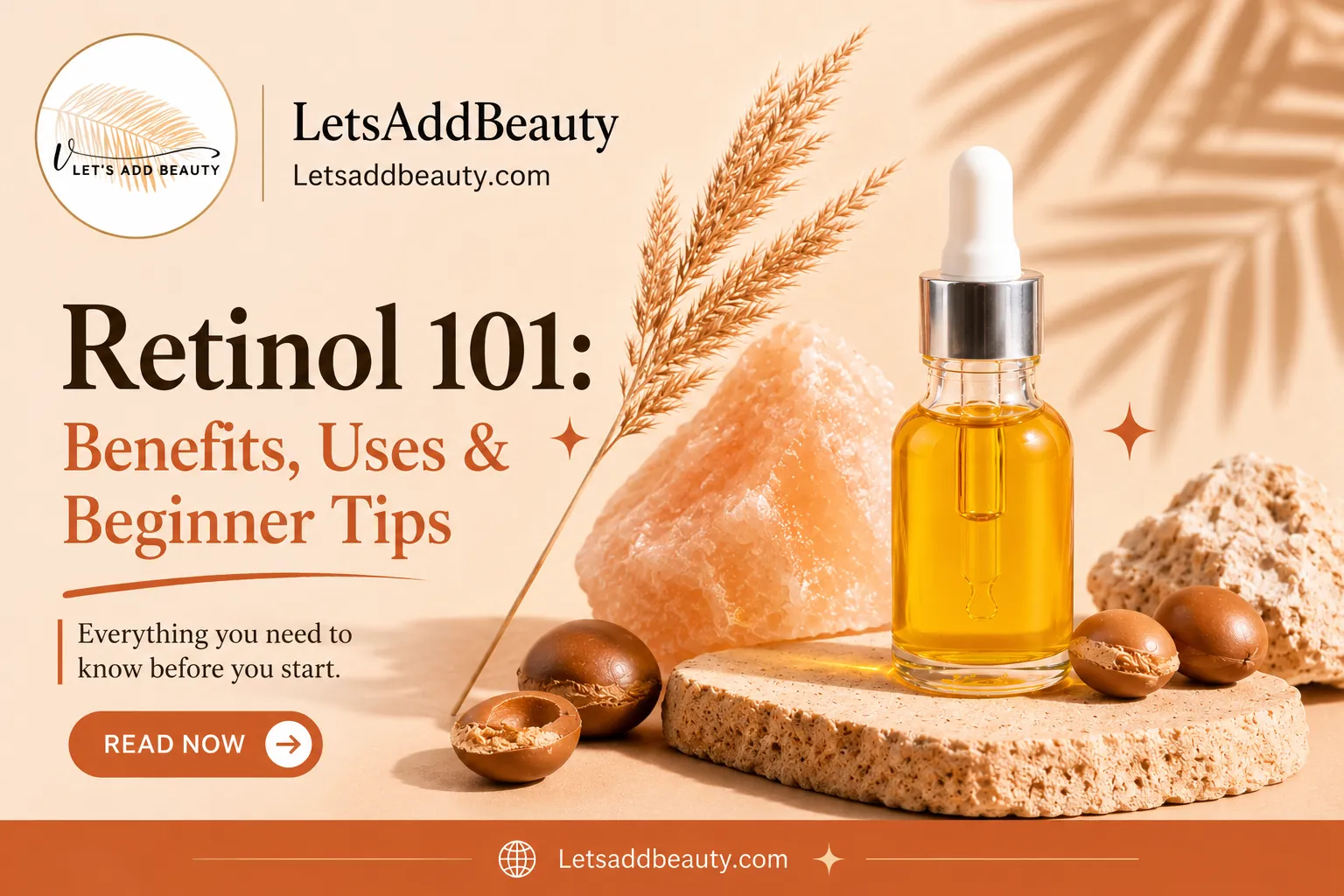
Retinol is one of the most researched skincare ingredients for reducing fine lines, wrinkles, acne scars, dark spots, enlarged pores, and uneven skin texture. Derived from Vitamin A, retinol works by increasing cell turnover and supporting collagen production, making it a popular ingredient in anti-aging and acne-fighting skincare routines.
Whether you’re a beginner wondering how to start using retinol or looking for the best retinol serum for wrinkles, acne scars, or hyperpigmentation, this guide covers everything you need to know. We’ll discuss retinol benefits, side effects, how to use retinol correctly, what ingredients can be paired with retinol, common mistakes to avoid, and the best retinol products for different skin types
🩷 What Does Retinol Do for Skin?
- Reduces fine lines and wrinkles
- Improves acne scars and post-acne marks
- Helps fade dark spots and hyperpigmentation
- Boosts collagen production
- Improves skin texture and enlarged pores
- Supports smoother and firmer skin
- Best applied at night
- Daily sunscreen is essential when using retinol
- Beginners should start with low concentrations (0.1%–0.3%)
🌸 What is Retinol?
Retinol is a derivative of Vitamin A, and part of the retinoid family. They are a class of compounds that encompass both over-the-counter and prescription-strength products used for a range of skin concerns. It is known for its remarkable ability to promote cell turnover and collagen production. Retinol is available in various concentrations and formulations, making it accessible for many people.
💖 Best Retinol Products at a Glance
| Skin Concern | Recommended Product | Amazon | Nykaa |
|---|---|---|---|
| 🌸 Beginners | Re’equil 0.1% Retinol Night Cream | 🛒 BUY | 🛍️ BUY |
| 💧 Dry Skin | Neutrogena Rapid Wrinkle Repair | 🛒 BUY | 🛍️ BUY |
| ✨ Acne Scars | Deconstruct 0.2% Retinol Serum | 🛒 BUY | 🛍️ BUY |
| 🌟 Hyperpigmentation | La Roche Posay Pure Retinol Serum | 🛒 BUY | 🛍️ BUY |
| ⏳ Wrinkles & Fine Lines | The Ordinary Retinol 0.5% in Squalane | 🛒 BUY | 🛍️ BUY |
💡 Not sure which retinol is right for your skin? Keep reading to learn how to choose the best retinol for beginners, dry skin, acne scars, wrinkles, and hyperpigmentation.
🧬 The Retinoid Family:
All retinoids belong to the Vitamin A family, but they vary in strength, effectiveness, and irritation potential. Choosing the right retinoid depends on your skin type, concerns, and experience level.
| Retinoid Type | Strength | Best For |
|---|---|---|
| Retinol | Mild | Beginners, anti-aging, skin texture |
| Retinaldehyde | Medium | Faster results with moderate irritation |
| Adapalene | Medium | Acne-prone skin |
| Tretinoin | Strong | Wrinkles, acne, pigmentation |
| Tazarotene | Very Strong | Advanced anti-aging and acne treatment |
✨ Which Retinoid Is Best for Beginners?
If you are new to retinoids, retinol is usually the best starting point because it provides anti-aging and skin-renewing benefits with a lower risk of irritation compared to prescription-strength retinoids.
🤔 Where can you find Retinol: Skincare Ingredient for anti-aging and wrinkles
Retinol and other retinoids are derived from Vitamin A, which are found in many food sources and skincare products. Here’s a closer look at where it comes from:
🌿 Natural Sources of Vitamin A
Retinol belongs to the Vitamin A family. While skincare products contain retinol directly, Vitamin A can naturally be found in foods such as eggs, dairy products, fish, carrots, sweet potatoes, spinach, and leafy greens.
However, the benefits of topical retinol skincare products are much more targeted because they deliver the ingredient directly to the skin.
🧴 Common Retinol Skincare Products
Retinol is available in different skincare formulations, making it easy to choose a product based on your skin type and concerns.
- Retinol Serums – Lightweight and fast-absorbing, ideal for wrinkles, acne scars, and hyperpigmentation.
- Retinol Creams – More moisturizing and suitable for dry or sensitive skin.
- Retinol Eye Creams – Designed for fine lines and wrinkles around the eyes.
- Retinol Acne Treatments – Help improve breakouts, clogged pores, and post-acne marks.
🔭 The Science Behind Retinol: How Does Retinol Work?
Retinol works at a cellular level by increasing skin cell turnover and supporting collagen production. Once applied to the skin, retinol is converted into retinoic acid, which interacts with skin cells to improve texture, reduce wrinkles, fade dark spots, and support healthier-looking skin.
This is why retinol is considered one of the most effective anti-aging and skin-renewing skincare ingredients available today.
1. Increases Skin Cell Turnover
One of retinol’s biggest benefits is its ability to speed up skin cell turnover. As we age, dead skin cells accumulate on the surface of the skin, leading to dullness, clogged pores, rough texture, and uneven skin tone.
Retinol encourages the skin to shed old cells and replace them with newer, healthier cells.
Benefits of increased cell turnover:
- Brighter-looking skin
- Smoother skin texture
- Reduced clogged pores
- Improved acne-prone skin
- Faster fading of dark spots
2. Boosts Collagen Production
Collagen is the protein responsible for keeping skin firm, smooth, and youthful-looking. Natural collagen production decreases with age, leading to wrinkles, fine lines, and skin laxity.
Retinol helps stimulate collagen production, making it one of the most effective skincare ingredients for anti-aging concerns.
Benefits of increased collagen production:
- Reduced fine lines and wrinkles
- Firmer-looking skin
- Improved skin elasticity
- Better skin texture
- Smoother complexion
3. Helps Protect Against Environmental Damage
Retinol also offers antioxidant benefits by helping neutralize free radicals generated by pollution, UV exposure, and environmental stressors.
By reducing oxidative stress, retinol supports healthier-looking skin and helps prevent signs of premature aging.
Benefits include:
- Protection against environmental damage
- Reduced appearance of aging
- Support for skin repair processes
- Healthier overall skin appearance
⭐ Why Retinol Works So Well
Retinol improves skin through multiple pathways at the same time:
- Speeds up cell turnover
- Boosts collagen production
- Improves skin texture
- Reduces wrinkles
- Fades acne scars and dark spots
- Helps unclog pores
- Supports long-term skin renewal
This combination makes retinol one of the most effective skincare ingredients for both anti-aging and acne-prone skin.
✨ Retinol Benefits for Skin: Why Dermatologists Recommend It
The combination of increased cell turnover, collagen production, and antioxidant protection makes retinol a powerhouse ingredient with a wide range of benefits.
1. Anti-Aging Skincare:
Retinol is widely considered one of the most effective anti-aging skincare ingredients because it helps stimulate collagen production and increase skin cell turnover. As collagen levels decline with age, fine lines, wrinkles, and skin laxity become more noticeable.
Regular use of retinol helps improve skin firmness, elasticity, and overall texture.
Benefits include:
- Reduced fine lines and wrinkles
- Improved skin firmness
- Better skin elasticity
- Smoother skin texture
- More youthful-looking skin
2. Retinol for Acne:
Retinol is highly effective for acne-prone skin because it helps prevent clogged pores, reduces excess oil buildup, and supports healthy skin renewal. By increasing cell turnover, retinol can reduce both active breakouts and future acne formation.
Benefits include:
- Reduced breakouts
- Clearer pores
- Less congestion
- Improved acne-prone skin
- Healthier skin texture
3. Retinol for Dark Spots and Hyperpigmentation
Retinol helps fade dark spots, post-inflammatory hyperpigmentation, sun spots, and uneven skin tone by accelerating skin renewal. As older pigmented skin cells are replaced with newer cells, the complexion gradually appears brighter and more even.
Benefits include:
- Improved skin tone
- Reduced pigmentation
- Brighter complexion
- Faster fading of post-acne marks
- Improved skin radiance
4. Retinol for Pores and Texture
Retinol improves skin texture by encouraging the removal of dead skin cells and supporting healthier skin renewal. Regular use can also help minimize the appearance of enlarged pores by keeping them clear and reducing congestion.
Benefits include:
- Smoother skin texture
- Refined pores
- Improved skin clarity
- Reduced rough patches
- More even-looking skin
5. Retinol for Acne Scars and Post-Acne Marks
One of the most popular benefits of retinol is its ability to improve the appearance of acne scars and post-inflammatory hyperpigmentation. By increasing skin cell turnover, retinol helps fade leftover acne marks and encourages healthier skin renewal.
Benefits include:
- Fading post-acne marks
- Improving uneven skin texture
- Supporting smoother skin
- Helping skin look brighter over time
- Improving overall skin clarity
6. Retinol for Uneven Skin Tone
Retinol supports faster skin renewal, helping reduce patchiness, dullness, and uneven pigmentation. Over time, consistent use can create a brighter, more balanced complexion.
Benefits include:
- More even skin tone
- Reduced dullness
- Brighter complexion
- Better skin radiance
- Improved overall appearance
⏳ Retinol Before and After: When Can You Expect Results?
Many people wonder how long retinol takes to work. Although results vary depending on skin type and concerns, most users notice:
- 2–4 weeks: smoother skin texture
- 4–8 weeks: brighter complexion
- 8–12 weeks: visible improvement in acne scars and dark spots
- 3–6 months: reduction in fine lines and wrinkles
Consistency is one of the most important factors when using retinol. Long-term use generally produces the most noticeable improvements.
🧴 How to Incorporate Retinol into Your Skincare Routine
While the benefits of retinol are extensive, it’s essential to use it correctly to avoid irritation and maximise its effectiveness. Here are some guidelines for incorporating retinol into your skincare routine:
1. Start Slow
If you’re new to retinol, it’s crucial to start with a lower concentration to allow your skin to acclimate. Begin by using it once or twice a week and gradually increase the frequency as your skin adjusts.
2. Use at Night
Retinol can make your skin more sensitive to sunlight, so it’s best to apply it at night. This also allows the ingredient to work with your skin’s natural repair processes that occur during sleep.
3. Follow with Moisturiser
Retinol can be drying, especially when you first start using it. Apply a gentle moisturizer after your retinol to help maintain hydration and reduce the risk of irritation.
4. Pair with Sunscreen
Because retinol can increase sun sensitivity, daily sunscreen use is non-negotiable. Apply a broad-spectrum sunscreen with at least SPF 30 every morning to protect your skin from UV damage.
5. Be Patient
It can take several weeks to months to see significant results from retinol. Consistency is key, and the long-term benefits are well worth the wait.
🌙 Beginner Retinol Routine
If you’re wondering how to start using retinol for beginners, following a simple routine can help minimise irritation while still delivering results.
Step 1: Cleanse
Use a gentle cleanser to remove dirt, sunscreen, and makeup without stripping the skin.
Step 2: Apply Hydrating Serum (Optional)
A hydrating serum containing hyaluronic acid can help reduce dryness and support the skin barrier.
Step 3: Apply Retinol
Use a pea-sized amount of retinol and spread it evenly across the face. Avoid the corners of the eyes, nose, and lips.
Step 4: Moisturise
Follow with a nourishing moisturiser containing ceramides, glycerin, or hyaluronic acid.
Step 5: Wear Sunscreen the Next Morning
Always apply SPF 30 or higher during the day because retinol can increase sun sensitivity.
🥪 The Sandwich Method for Retinol
If you have dry or sensitive skin, the sandwich method can help reduce irritation while your skin adjusts to retinol.
How to Use the Sandwich Method
- Apply a thin layer of moisturiser.
- Apply a pea-sized amount of retinol.
- Follow with another layer of moisturiser.
This technique helps reduce dryness, redness, and peeling while allowing you to enjoy the benefits of retinol.
Best For:
- Dry skin
- Sensitive skin
- Retinol beginners
- People experiencing irritation
⏰ How Often Should You Use Retinol?
One of the most common questions beginners ask is how often they should use retinol.
Beginner
- Use 1–2 times per week.
Intermediate
- Use every other night.
Experienced Users
- Use nightly if your skin tolerates it well.
Building tolerance gradually helps minimise irritation and improve long-term results.
🚫 Common Retinol Mistakes to Avoid
Even the best retinol serum can cause problems if used incorrectly. Avoid these common mistakes:
1. Using Too Much Product
- A pea-sized amount is enough for the entire face.
2. Starting With a High Strength
- Beginners should start with lower concentrations such as 0.1%–0.3%.
3. Skipping Moisturiser
- Moisturiser helps reduce dryness and protects the skin barrier.
4. Not Wearing Sunscreen
- Daily sunscreen is essential when using retinol.
5. Using It Every Night Immediately
- Increase usage gradually rather than jumping straight into daily use.
⭐ Best Retinol Products for Different Skin Concerns
To help you get started, here are some popular and highly recommended products:
🌸 Best Retinol for Beginners
1. RE’ EQUIL 0.1% Retinol Night Cream
If you’re new to retinol, RE’ EQUIL 0.1% Retinol Night Cream is one of the best beginner-friendly options. The lower concentration helps your skin build tolerance gradually while still providing anti-aging and skin-renewing benefits.

Best For
- Retinol beginners
- Mild fine lines
- Enlarged pores
- Dull skin
- Sensitive beginners
Why We Like It
- Beginner-friendly concentration
- Less irritating than stronger retinoids
- Helps improve skin texture
- Affordable compared to many alternatives
💧 Best Retinol for Dry Skin
2. Neutrogena Rapid Wrinkle Repair Regenerating Cream
Dry skin users often struggle with irritation when starting retinol. Neutrogena Rapid Wrinkle Repair combines retinol with hydrating ingredients that help minimise dryness while targeting wrinkles and uneven skin texture.

Best For
- Dry skin
- Mature skin
- Fine lines
- Early anti-aging
- Skin barrier support
Why We Like It
- Hydrating formula
- Beginner-friendly
- Helps reduce visible wrinkles
- Suitable for nightly use
✨ Best Retinol for Acne Scars
3. Deconstruct 0.2% Retinol Face Serum With 1% Peptide
Retinol and Peptides together works effectively on skin’s collagen production thus acting as an anti-aging combination. This serum combines retinol and peptides, making it a great choice for people dealing with acne scars, uneven skin texture, and early signs of aging.

Best For
- Acne scars
- Uneven texture
- Early wrinkles
- Skin renewal
- Post-acne marks
Why We Like It
- Contains peptides
- Helps improve skin texture
- Lightweight serum formula
- Suitable for most skin types
⏳ Best Retinol for Wrinkles and Fine Lines
4. The Ordinary Retinol 0.5% In Squalane
The Ordinary Retinol 0.5% in Squalane is designed for experienced retinol users looking for stronger anti-aging results. The addition of squalane helps reduce dryness while supporting the skin barrier.

Best For
- Wrinkles
- Fine lines
- Advanced anti-aging
- Experienced retinol users
- Skin firmness
Why We Like It
- Strong concentration
- Contains squalane
- Excellent value for money
- Targets visible aging concerns
🌟 Best Retinol for Hyperpigmentation
5. La Roche-Posay Pure Retinol Face Serum with Vitamin B3
This serum combines retinol with Vitamin B3 (Niacinamide) to help improve uneven skin tone, pigmentation, and overall skin radiance.

Best For
- Hyperpigmentation
- Dark spots
- Sun damage
- Uneven skin tone
- Dull skin
Why We Like It
- Includes Niacinamide
- Brightening benefits
- Supports smoother skin
- Suitable for anti-aging routines
🛒 How to Choose the Best Retinol Product
Choosing the best retinol product depends on your skin type, skin concerns, and experience level.
Choose Low Strength (0.1–0.3%) If:
- You are a beginner
- You have sensitive skin
- You have dry skin
Opt for Medium Strength (0.3–0.5%) If:
- You already use active ingredients
- Your skin tolerates retinol well
Choose Higher Strength (1%) If:
- You have experience using retinoids
- Your goal is advanced anti-aging
- Your skin tolerates stronger actives
⭐ Choosing the Right Retinol Product
With so many retinol products available, choosing the right one can feel overwhelming. The best retinol serum or cream depends on your skin type, skin concerns, and experience level.
1. If You’re a Beginner
Start with a lower concentration between 0.1% and 0.3%.
These formulas are less likely to cause irritation and allow your skin to build tolerance gradually.
Recommended:
✔ Re’equil 0.1% Retinol Night Cream
2. If You Have Dry Skin
Choose retinol products that contain moisturizing ingredients such as ceramides, hyaluronic acid, glycerin, or squalane.
These ingredients help reduce dryness and support the skin barrier.
Recommended:
✔ Neutrogena Rapid Wrinkle Repair
3. If You Have Acne Scars or Uneven Texture
Look for retinol products combined with peptides or soothing ingredients that support skin renewal and collagen production.
Recommended:
✔ Deconstruct 0.2% Retinol Face Serum
4. If Your Main Concern Is Wrinkles
Higher-strength retinol products may deliver more noticeable anti-aging results once your skin has built tolerance.
Recommended:
✔ The Ordinary Retinol 1% in Squalane
5. If You Want to Treat Dark Spots
Choose retinol products combined with brightening ingredients such as niacinamide.
Recommended:
✔ La Roche Posay Pure Retinol Face Serum
🤝 How to Use Other Skincare Ingredients With Retinol
⭐ What Can You Use With Retinol?
| Ingredient | Safe With Retinol? | Best Way to Use |
|---|---|---|
| Hyaluronic Acid | ✅ Yes | Same routine |
| Ceramides | ✅ Yes | Same routine |
| Niacinamide | ✅ Yes | Same routine |
| Peptides | ✅ Yes | Same routine |
| Vitamin C | ⚠ Use separately | Morning |
| Glycolic Acid (AHA) | ⚠ Alternate nights | Not same routine |
| Lactic Acid (AHA) | ⚠ Alternate nights | Not same routine |
| Salicylic Acid (BHA) | ⚠ Alternate nights | Not same routine |
1. Hyaluronic Acid and Retinol
Hyaluronic acid is one of the best ingredients to pair with retinol because it helps attract moisture and reduce dryness.
Using hyaluronic acid with retinol can help maintain hydration, support the skin barrier, and improve comfort while your skin adjusts to retinol.
Best For
- Dry skin
- Dehydrated skin
- Retinol beginners
- Sensitive skin
READ: hyaluronic acid for skin
2. Ceramides and Retinol
Ceramides are skin-identical lipids that help strengthen the skin barrier and reduce moisture loss. Since retinol can sometimes cause dryness, peeling, and irritation, pairing it with ceramides can help improve tolerance and keep the skin comfortable.
Using ceramide-rich moisturisers alongside retinol is one of the best ways to support the skin barrier while still enjoying the anti-aging and skin-renewing benefits of retinol.
Best For
- Dry skin
- Sensitive skin
- Compromised skin barrier
- Retinol beginners
- People experiencing irritation
Why This Combination Works
- Helps reduce dryness and peeling
- Supports the skin barrier
- Improves moisture retention
- Makes retinol easier to tolerate
- Reduces irritation risk
3. Niacinamide and Retinol
This combination works exceptionally well together. Niacinamide helps strengthen the skin barrier and reduce irritation, while retinol supports skin renewal and collagen production.
This combination is especially helpful for people dealing with acne marks, enlarged pores, uneven skin tone, and early signs of aging.
Best For
- Acne-prone skin
- Enlarged pores
- Hyperpigmentation
- Sensitive skin
4. Vitamin C and Retinol
Both Vitamin C and retinol are powerful skincare ingredients, but they are generally best used in separate routines to minimize irritation.
Recommended Routine
🌞 Morning: Vitamin C
🌙 Night: Retinol
This approach allows you to enjoy the brightening benefits of Vitamin C while still benefiting from retinol’s skin-renewing properties.
READ: BEST VITAMIN C serums under 700
5. Peptides and Retinol
Peptides help support collagen production and skin repair, making them an excellent partner for retinol.
Using peptides alongside retinol can improve skin firmness, elasticity, and overall anti-aging results.
Best For
- Fine lines
- Wrinkles
- Skin firmness
- Anti-aging routines
✨ Retinol vs Peptides vs Glutathione: Which One Is Right for You?
Many skincare beginners wonder whether they should choose retinol, peptides, or glutathione. The answer depends on your skin goals.
| Ingredient | Best For | Works By |
|---|---|---|
| Retinol | Wrinkles, acne scars, texture, pores | Increases cell turnover and collagen production |
| Peptides | Fine lines, skin firmness, skin barrier support | Signals the skin to produce more collagen |
| Glutathione | Brightening, dull skin, uneven skin tone | Powerful antioxidant that helps reduce oxidative stress |
When to Choose Retinol
Choose retinol if your main concern is:
- Fine lines and wrinkles
- Acne scars
- Enlarged pores
- Uneven skin texture
- Anti-aging
When to Choose Peptides
Choose peptides if your main concern is:
- Skin firmness
- Early signs of aging
- Sensitive skin
- Supporting collagen production
When to Choose Glutathione
Choose glutathione if your main concern is:
- Dull skin
- Brightening
- Uneven complexion
- Antioxidant protection
Can You Use Them Together?
Yes. Retinol, peptides, and glutathione can often be used together in a well-balanced skincare routine because they target different skin concerns and work through different mechanisms.
⚠️ What Not to Mix With Retinol
Certain active ingredients can increase irritation when used in the same routine as retinol.
Use With Caution
- Glycolic Acid
- Lactic Acid
- Salicylic Acid
- Benzoyl Peroxide
If you use these ingredients, consider alternating nights instead of layering them with retinol.
Example
- Monday: Retinol
- Tuesday: Exfoliating Acid
- Wednesday: Retinol
- Thursday: Exfoliating Acid
This approach helps reduce redness, peeling, and irritation.
⚠️ Potential Side Effects of Retinol & How to Manage Them
While retinol is highly effective, it can cause side effects, especially when you first start using it.
⭐ Common Retinol Side Effects at a Glance
| Side Effect | Normal? | How to Manage |
|---|---|---|
| Mild Dryness | ✅ Yes | Use moisturiser |
| Peeling | ✅ Yes | Reduce frequency |
| Redness | ✅ Yes | Use sandwich method |
| Purging | ✅ Yes | Give skin time |
| Burning | ❌ Not Normal | Stop use and reassess |
| Severe Irritation | ❌ Not Normal | Consult dermatologist |
1. Irritation and Redness
Many people experience redness, peeling, and dryness when they first start using retinol. To manage this:
- Start slow: As mentioned, begin with a lower concentration and gradually increase frequency.
- Moisturise: Ensure you’re using a good moisturiser to help soothe and hydrate your skin.
- Consider buffering: Apply your moisturiser before retinol to create a buffer, reducing the risk of irritation.
2. Sensitivity
Retinol can make your skin more sensitive to other skincare products and treatments. To minimise sensitivity:
- Avoid harsh products: Steer clear of other potentially irritating ingredients like benzoyl peroxide or alpha hydroxy acids (AHAs) when you first start using retinol.
- Simplify your routine: Stick to gentle, hydrating products that support your skin barrier.
3. Purging
Some people experience an initial breakout, known as “purging,” when starting retinol. This happens as the increased cell turnover brings underlying congestion to the surface. If this occurs:
- Be patient: Purging typically lasts a few weeks. If breakouts persist beyond this, consider consulting a dermatologist.
- Stay consistent: Discontinuing use can prolong the purging period. Stick with your routine to allow your skin to adjust.
🔄 Retinol Purge vs Breakout: How to Tell the Difference
Many beginners worry that retinol is causing acne when they start experiencing breakouts. In reality, this may be a temporary process known as retinol purging.
| Retinol Purge | Regular Breakout |
|---|---|
| Happens when starting retinol | Can happen anytime |
| Appears in areas where you usually break out | Can appear anywhere |
| Usually improves within 4–8 weeks | May continue without improvement |
| Caused by increased cell turnover | Caused by clogged pores, hormones, or other factors |
If breakouts continue for more than 8 weeks or appear in completely new areas, it may not be purging and you should consult a dermatologist.
🧬 Does Retinol Thin the Skin?
A common skincare myth is that retinol thins the skin.
The truth is that retinol may temporarily make the outer layer of dead skin cells appear thinner because it increases cell turnover. However, long-term use actually supports collagen production and helps improve skin thickness and firmness over time.
This is one reason retinol remains one of the most recommended ingredients for anti-aging skincare.
🌸 Retinol for Sensitive Skin
People with sensitive skin can still use retinol, but it is important to introduce it gradually.
Tips for sensitive skin:
- Start with a low concentration (0.1%–0.3%)
- Use the sandwich method
- Apply retinol only 1–2 times per week initially
- Pair with ceramides and hydrating ingredients
- Avoid combining with strong exfoliating acids
Building tolerance slowly can help sensitive skin enjoy the benefits of retinol with minimal irritation.
🚨 When Should You Stop Using Retinol?
Temporary dryness, peeling, and mild irritation are common when starting retinol.
However, stop using retinol and consult a dermatologist if you experience:
- Severe burning
- Persistent redness
- Swelling
- Painful irritation
- Allergic reactions
Most people can successfully use retinol by adjusting frequency and using supportive skincare products.
🌸 Retinol by Skin Type
Retinol can benefit most skin types, but the way you use it may vary depending on your skin’s needs.
1. Retinol for Dry Skin
People with dry skin should start with lower concentrations and always pair retinol with moisturising ingredients such as ceramides, hyaluronic acid, and glycerin.
Using the sandwich method can also help minimise dryness and irritation.
Read: best skincare routine for dry skin
2. Retinol for Oily Skin
Retinol can help regulate excess oil production, improve skin texture, and reduce clogged pores.
Lightweight retinol serums are often preferred for oily and acne-prone skin types.
3. Retinol for Combination Skin
Combination skin can usually tolerate retinol well when introduced gradually.
Focus on maintaining hydration while targeting concerns such as enlarged pores, uneven texture, and early signs of aging.
4. Retinol for Sensitive Skin
Sensitive skin users should begin with low-strength retinol products and use them only once or twice a week initially.
Pairing retinol with ceramides and hydrating ingredients can help improve tolerance over time.
FAQs:
Q: Is retinol suitable for all skin types?
A: It can be beneficial for most skin types, but those with sensitive skin should proceed with extra caution. It’s always best to consult with a dermatologist if you have concerns or pre-existing skin conditions.
Q: Can I use retinol during pregnancy or breastfeeding?
A: It’s generally recommended to avoid retinol during pregnancy and breastfeeding due to potential risks. Consult your healthcare provider for safe skincare alternatives during this period.


[…] all the skincare ingredients like, hyaluronic acid, niacinamide, ceramides, peptides, glutathione, retinol, that have created a huge buzz nowadays and are actually a game changer for your […]